17 Mysterious Structures in the U.S. No One Can Explain
The United States is filled with iconic landmarks and well-documented monuments, but hidden among them are structures that continue to puzzle experts and travelers alike. From ancient stone walls to enigmatic towers, these mysterious places raise more questions than answers. Some are tied to folklore, others to lost civilizations, and a few simply defy explanation altogether. For adventurous U.S. travel seekers, here are 17 Mysterious Structures in the U.S. No One Can Explain.
The Coral Castle, Florida

In Homestead, Florida, the Coral Castle is one of the most perplexing modern mysteries in America. Built single-handedly by Edward Leedskalnin in the early 20th century, the structure is made of massive limestone blocks, some weighing several tons. The astonishing feat is that Leedskalnin, a slight man with little formal education, claimed to have discovered the secrets of ancient pyramid builders. Scientists remain baffled as to how he moved and carved the stones without machinery. Today, it’s a major U.S. travel attraction blending romance, folklore, and engineering mystery.
The Georgia Guidestones, Georgia
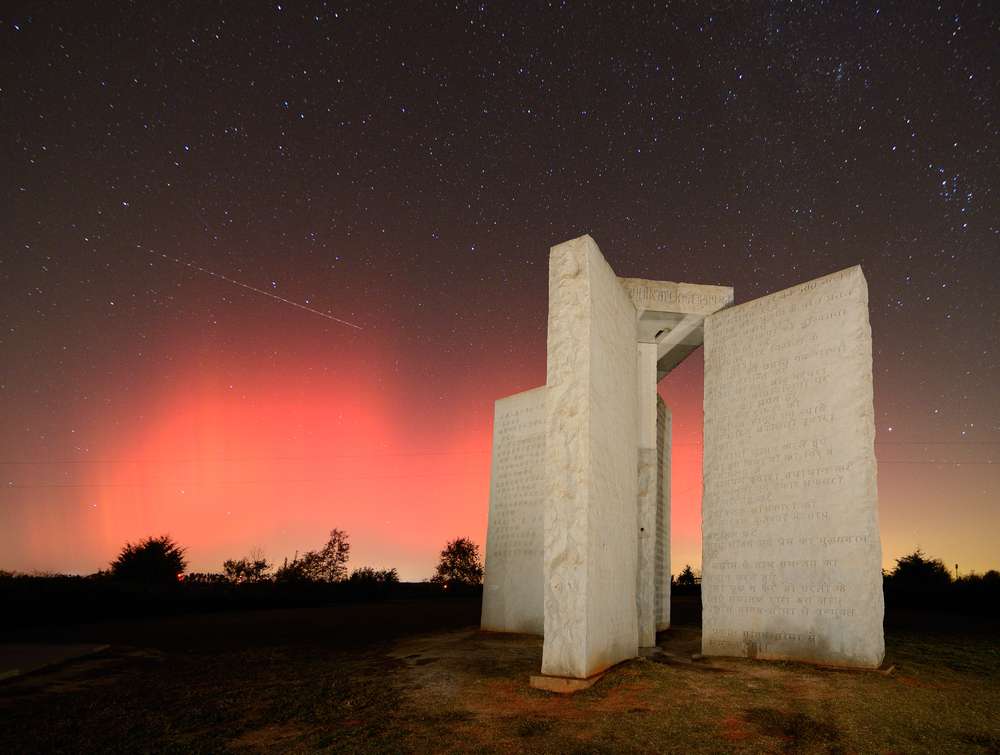
Though destroyed in 2022, the Georgia Guidestones in Elbert County remain one of the country’s most mysterious lost landmarks. Erected in 1980, the granite slabs displayed inscriptions in multiple languages offering cryptic guidance for humanity’s future. Some saw it as a monument to peace and sustainability, while others believed it was tied to secret societies. The fact that the true sponsors remain unknown adds to the allure. Even in absence, it continues to inspire curiosity in American travel lore.
The Newport Tower, Rhode Island

In Touro Park, Newport Tower stands as a circular stone structure whose origins remain debated. Some historians claim it was built in the 17th century as a colonial windmill, while others argue it may date back to Norse explorers or even the Knights Templar. The tower’s unusual design and lack of definitive records only fuel speculation. Travelers to Rhode Island encounter not only a scenic coastal town but also this centuries-old enigma at its heart.
Mystery Hill, Texas

Deep in the Texas countryside, scattered stone walls and mounds have been collectively referred to as “Mystery Hill.” While some claim these formations are the remnants of ancient civilizations or even pre-Columbian settlers, others suggest they may simply be natural features. The lack of definitive archaeological conclusions makes the site particularly fascinating. Visitors exploring Texas history often stumble upon these formations and are left with more questions than answers.
The Great Serpent Mound, Ohio

Stretching nearly 1,400 feet, the Serpent Mound in Ohio is one of the largest effigy mounds in the world. The structure depicts a snake uncoiling across the landscape, yet its purpose is unknown. Some scholars believe it was built for religious ceremonies, while others suggest it aligns with astronomical events. The mound’s sheer size and precision continue to amaze visitors. For those exploring the Midwest, it is both a natural wonder and a lingering mystery.
The Miami Circle, Florida

Discovered in downtown Miami in 1998, the Miami Circle is a series of 24 holes carved into limestone bedrock. Believed to be at least 2,000 years old, it is associated with the Tequesta people, though its exact use is unclear. Some think it may have been a foundation for structures, while others argue it had ceremonial significance. Today, surrounded by modern skyscrapers, the Miami Circle is an ancient mystery hidden in plain sight.
The Oregon Vortex, Oregon

The Oregon Vortex in Gold Hill is a roadside attraction with an unusual reputation. Visitors report strange optical illusions where objects appear to roll uphill and people seem to change height when standing in different spots. While skeptics attribute the effects to visual tricks, others believe the site holds a natural gravitational anomaly. Whether science or superstition, the Oregon Vortex leaves visitors mystified. It’s one of the quirkiest U.S. travel destinations for curious minds.
The Bighorn Medicine Wheel, Wyoming

Atop a mountain in Wyoming lies the Bighorn Medicine Wheel, a large stone circle with radial lines extending outward. Believed to be at least 700 years old, it may have been used for astronomical or ceremonial purposes. Native traditions tie it to spiritual practices, though its exact function is still debated. Today, it remains a sacred place and a breathtaking stop for travelers exploring the American West.
The Berkeley Mystery Walls, California

Stretching for miles through the hills east of San Francisco are stone walls whose origins are unknown. Some suggest they were built by early settlers, but their irregular design and placement defy simple explanation. Others speculate they may be remnants of a much older culture. Hiking along these stone lines, travelers find themselves immersed in a puzzle left unsolved for centuries.
Casa Grande Ruins, Arizona

In Coolidge, Arizona, the Casa Grande Ruins rise as a massive four-story adobe structure built by the Hohokam people around 1350 CE. While archaeologists know who constructed it, its exact purpose—whether ceremonial, residential, or astronomical—remains uncertain. The building’s durability in the desert climate adds to its intrigue. For U.S. travelers exploring the Southwest, it is both a marvel of engineering and a lingering riddle.
The Newark Earthworks, Ohio

The Newark Earthworks in Ohio consist of enormous geometric earthen enclosures, some stretching for miles. Built by the Hopewell culture over 2,000 years ago, their scale suggests significant social organization. Yet scholars still debate whether they served ceremonial, astronomical, or defensive functions. Today, they are preserved as a National Historic Landmark, offering a glimpse into a sophisticated yet mysterious ancient society.
The Mystery Spot, Michigan

Located near St. Ignace, Michigan, the Mystery Spot has long fascinated tourists with its gravity-defying illusions. Objects appear to roll uphill, and people seem to tilt at impossible angles. While skeptics attribute the phenomena to optical illusions, others believe the site may hold an unexplained magnetic anomaly. Regardless of explanation, the Mystery Spot continues to draw visitors eager to experience its strange effects.
The Rockwall, Texas

Beneath the town of Rockwall, Texas, lies a buried stone wall that has sparked decades of debate. Some claim it is a natural geological formation, while others argue it is evidence of a lost civilization. Excavations have revealed long stretches of stone blocks that appear too organized to be accidental. For travelers, it represents one of the great unsolved enigmas of the American South.
The Cahokia Mounds, Illinois

The Cahokia Mounds are the remains of a massive ancient city near modern-day St. Louis. At its peak around 1200 CE, Cahokia may have housed 20,000 people. The city’s central Monk’s Mound rises nearly 100 feet high, yet archaeologists still debate how such a large urban center collapsed so suddenly. Visitors find the site awe-inspiring, a reminder of a once-thriving civilization whose mysteries endure.
The Kensington Runestone, Minnesota

Discovered in 1898, the Kensington Runestone bears carvings in runic script that some claim prove Viking explorers reached Minnesota in the 14th century. Skeptics argue it is a hoax created by a 19th-century farmer, while others defend its authenticity. The stone remains one of the most hotly debated artifacts in U.S. history. For travelers, it is a fascinating stop blending history, controversy, and legend.
The Winchester Mystery House, California
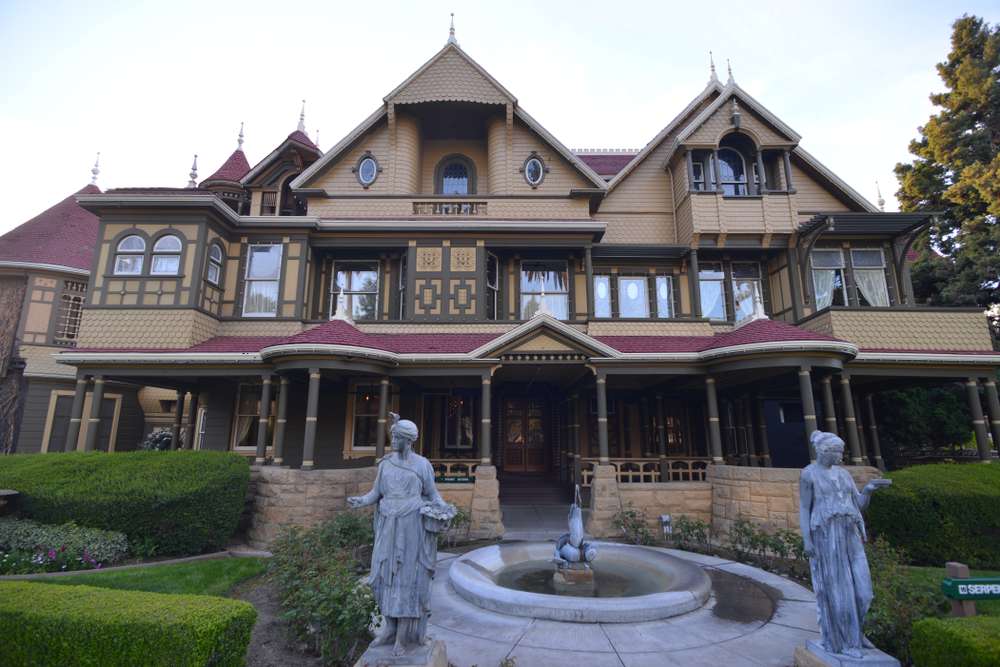
In San Jose, California, the Winchester Mystery House is a sprawling mansion filled with staircases to nowhere, doors opening into walls, and endless labyrinthine halls. Built by Sarah Winchester, widow of the rifle magnate, the house reflects her belief that she was haunted by those killed with Winchester rifles. Some say the confusing architecture was designed to confuse spirits, though others view it as eccentric obsession. Today, it’s one of the most famous haunted landmarks in the U.S.
The Hemet Maze Stone, California

Near Hemet, California, lies a boulder carved with an intricate maze design. The origins of this ancient petroglyph are completely unknown. Scholars have yet to determine whether it was created by Native Americans or another group, and its meaning remains a mystery. Travelers who visit the site encounter both the beauty of the California landscape and the puzzle of an unsolved symbol.

Deborah Montiero is a seasoned travel writer and contributor to Probe the Globe. With a passion for uncovering hidden gems and sharing immersive travel experiences, Deborah’s work highlights must-visit destinations, insider tips, and practical advice for travelers of all types. Whether exploring bustling cities or remote escapes, her articles are crafted to inspire and inform, making her a trusted voice in the travel community.
Her storytelling weaves together cultural insights, logistical tips, and authentic experiences, making her a valuable resource for readers seeking unforgettable journeys.
When not writing, Deborah is likely researching the latest travel trends or planning her next adventure. Follow her work on Probe the Globe for fresh perspectives and up-to-date travel inspiration.