20 Incredible U.S. Natural Phenomena You Didn’t Know Happened Here
From fiery deserts to frozen lakes, the United States is full of natural wonders that often go unnoticed. Beyond the famous landmarks, there are rare and mesmerizing phenomena that reveal just how diverse and surprising American landscapes can be. These events showcase the raw power and artistry of nature, offering unforgettable experiences for those willing to explore. Here are 20 incredible U.S. natural phenomena you didn’t know happened here.
Firefall at Yosemite National Park – California

Each February, Yosemite’s Horsetail Fall transforms into a cascade of fire. When the setting sun hits the waterfall at just the right angle, the water glows with an orange-red light that looks like molten lava streaming down the cliff. It lasts only a few minutes each evening during the brief alignment of sun and water flow. For travelers planning U.S. trips in winter, this fiery illusion is one of nature’s most breathtaking light shows.
Bioluminescent Bays – Florida

Along Florida’s coastline, a magical glow lights up the water at night. In places like Merritt Island and Mosquito Lagoon, microscopic organisms called dinoflagellates emit neon-blue light when disturbed. Every splash, paddle, or ripple sends shimmering trails across the dark water, creating a surreal, glowing effect. It’s an unforgettable phenomenon that reminds travelers how alive and mysterious U.S. coastal ecosystems truly are.
Sailing Stones of Death Valley – California

In the remote Racetrack Playa of Death Valley, massive stones seem to move across the desert floor all by themselves. Long trails mark their paths, but no one sees them shift. Scientists discovered that a rare combination of thin ice, water, and wind allows the rocks to glide slowly over the cracked earth. It’s a haunting and beautiful reminder of nature’s quiet power, hidden in one of America’s harshest landscapes.
Ice Bubbles of Abraham Lake – Colorado

Each winter, Colorado’s Abraham Lake turns into a frozen masterpiece. Trapped beneath the ice are thousands of methane bubbles, creating a dazzling, layered effect that looks like suspended pearls. Photographers from around the world travel here to capture the frozen formations glowing beneath the surface. It’s a stunning and lesser-known natural wonder that transforms a simple lake into a scene of otherworldly beauty during U.S. winters.
Catatumbo-Like Lightning at Lake Maracaibo’s U.S. Counterpart – Florida’s Lightning Alley

While Venezuela’s Lake Maracaibo is famous for nonstop lightning, Florida’s “Lightning Alley” produces a similarly electric spectacle. Stretching from Tampa to Orlando, this region experiences more lightning strikes than almost anywhere else in North America. On humid summer nights, the skies explode with bright flashes and booming thunder. For U.S. travelers chasing the thrill of storm season, it’s one of the most intense natural light shows you can witness safely from afar.
The Great Sand Dunes’ Singing Sands – Colorado

In Colorado’s Great Sand Dunes National Park, the desert itself hums and sings. When dry sand cascades down the dunes under the right conditions, it creates deep, resonant vibrations that sound like music. The phenomenon is caused by the friction of millions of sand grains moving together. Standing atop the dunes and hearing them “sing” underfoot feels like experiencing the Earth’s own symphony — a rare and unforgettable moment in U.S. travel.
Aurora Borealis – Alaska and the Northern States
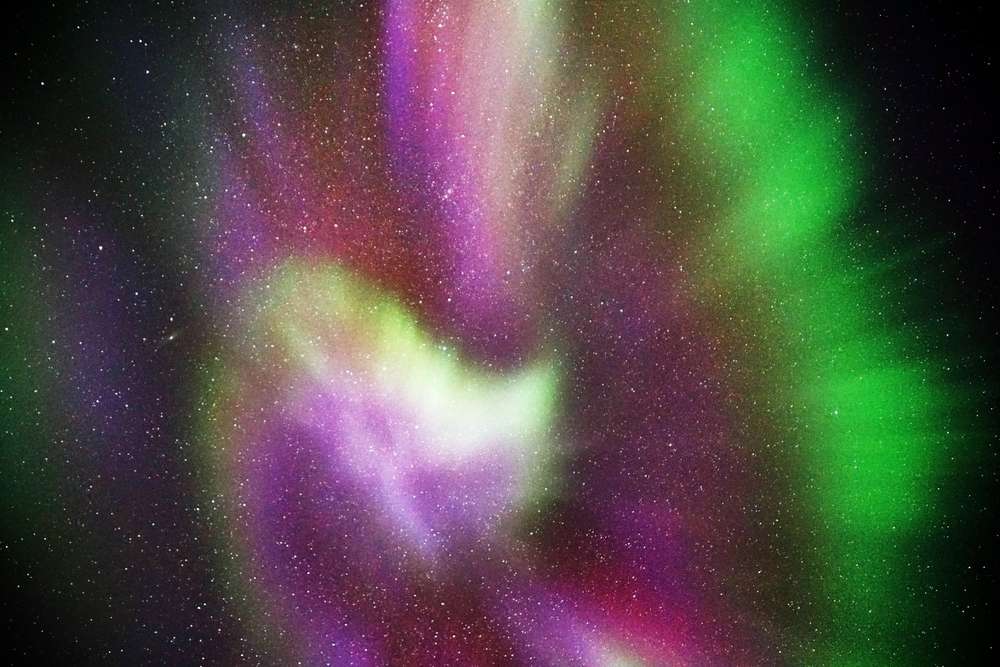
The Northern Lights aren’t exclusive to the Arctic Circle — they’re one of the most spectacular phenomena visible from the U.S. In Alaska, and sometimes as far south as Minnesota or Maine, ribbons of green, pink, and violet light dance across the night sky. This natural display is caused by charged solar particles colliding with Earth’s atmosphere. Seeing the aurora in America’s far north is like stepping into a living painting of cosmic energy.
Spotted Lake – Washington State

In the heat of summer, Washington’s Spotted Lake reveals an incredible sight — hundreds of colorful mineral pools that form circular patches across its surface. As the water evaporates, minerals like magnesium, calcium, and sodium crystallize, creating a mosaic of blues, greens, and yellows. The lake’s unique chemistry has made it sacred to local Indigenous communities for centuries. It’s a mesmerizing stop for U.S. travelers interested in both natural science and cultural history.
Fireflies Synchronized in the Smoky Mountains – Tennessee

Each year, a rare species of firefly lights up Great Smoky Mountains National Park in perfect synchronization. For a few magical weeks in late spring, thousands of fireflies flash their lights in unison, filling the forest with waves of golden light. It’s a stunning natural rhythm scientists still don’t fully understand. Watching the forest glow together feels like witnessing nature’s own choreography, a true hidden gem of U.S. travel.
Painted Hills – Oregon

Oregon’s Painted Hills look like they were brushed by an artist’s hand. Layers of red, gold, and black soil reveal millions of years of geological history. As sunlight shifts throughout the day, the hills seem to change color, glowing warmly at sunrise and sunset. Standing before these striped landscapes feels surreal, as though you’ve stepped into a fantasy film set right in the heart of America’s Pacific Northwest.
The Blue Fire of Hawaii’s Volcanoes

Most volcanic lava glows red or orange, but under special conditions on Hawaii’s Big Island, it can appear electric blue. When sulfur gases ignite at high temperatures, they burn with an otherworldly blue flame that glows against the dark volcanic rock. This rare phenomenon is best observed at night near active lava flows. For adventure seekers exploring U.S. volcanic landscapes, it’s one of the most mesmerizing sights on Earth.
Yosemite’s Moonbows – California

While rainbows are common, moonbows, rainbows created by moonlight, are far rarer. Yosemite National Park is one of the best places in the U.S. to see them. On clear nights during spring and early summer, mist from waterfalls refracts the light of the full moon, creating a silvery arc across the sky. Standing under a glowing moonbow feels like stepping into a dream, surrounded by the quiet majesty of Yosemite Valley.
The Tidal Bore of Turnagain Arm – Alaska

Near Anchorage, Alaska’s Turnagain Arm hosts one of the most powerful tidal bores in the world. When the tide rushes in, a single wave travels up the narrow inlet, sometimes over six feet high and moving at more than 10 miles per hour. Surfers even attempt to ride it for miles. This dramatic meeting of land and sea is a thrilling natural event that perfectly showcases Alaska’s wild energy.
The Fly Geyser – Nevada

In Nevada’s Black Rock Desert, a rainbow-colored geyser shoots steaming water into the sky. The Fly Geyser wasn’t entirely natural, it formed accidentally when geothermal drilling hit a hot water pocket, but nature took over from there. Over time, minerals built up vivid terraces of red, green, and yellow rock. The result is a living, evolving sculpture that looks like something from another planet, yet it’s right in the heart of the American West.
The Sailing Ice Discs – Maine

During frigid winters, Maine’s rivers occasionally produce enormous spinning discs of ice. These perfectly circular formations form when a section of ice breaks away and rotates slowly in the current, grinding itself into shape. Some are as large as a football field, rotating hypnotically on the water’s surface. For winter travelers exploring the Northeast, these icy wheels are one of the most curious and photogenic natural sights in the U.S.
The Great Salt Flats’ Mirror Effect – Utah

Utah’s Bonneville Salt Flats are famous for land-speed records, but during certain times of year, they transform into a vast natural mirror. After rainfall, a thin layer of water spreads across the salt crust, reflecting the sky so perfectly it’s hard to tell where the ground ends and the heavens begin. Walking or driving across this shimmering landscape feels like entering another dimension — a photographer’s paradise on any U.S. travel route.
The Glowing Sea of Stars – Puerto Rico

Along Puerto Rico’s Vieques Island, Mosquito Bay glows with a bioluminescent brilliance that has earned it recognition as the brightest in the world. At night, each movement in the water creates a glowing trail of light as microscopic organisms react to motion. Paddling through the glowing waters feels like drifting through a galaxy. It’s a bucket-list experience for anyone exploring America’s tropical territories and the wonders of U.S. coastal travel.
The Ice Volcanoes of Lake Michigan – Michigan

During harsh winters, Lake Michigan’s frozen shoreline transforms into a landscape of icy volcanoes. These cone-shaped formations erupt with water and slush as waves crash beneath the frozen surface. The geysers of icy spray create a frozen wonderland that feels otherworldly. While they’re unpredictable and best admired from a distance, these ice volcanoes are one of the Midwest’s most fascinating natural winter phenomena.
The Sandhill Crane Migration – Nebraska

Each spring, more than half a million sandhill cranes gather along the Platte River in Nebraska, filling the skies with their calls and graceful wings. The spectacle is so vast it’s visible for miles, turning the horizon into a moving tapestry of life. This ancient migration has occurred for thousands of years, marking one of nature’s grandest wildlife displays. For travelers seeking profound natural experiences, it’s a reminder of life’s enduring rhythms.
The Underwater Forest of Smith Lake – Alabama

In Alabama’s Smith Lake, the water hides an eerie yet beautiful secret: an ancient underwater forest. When the lake was created by damming the Sipsey Fork River, thousands of trees were submerged, and many still stand upright beneath the surface. On clear days, divers and boaters can see the ghostly trunks stretching toward the sunlight. It’s a hauntingly beautiful natural relic of a time before the reservoir existed, revealing another side of U.S. wilderness.

Deborah Montiero is a seasoned travel writer and contributor to Probe the Globe. With a passion for uncovering hidden gems and sharing immersive travel experiences, Deborah’s work highlights must-visit destinations, insider tips, and practical advice for travelers of all types. Whether exploring bustling cities or remote escapes, her articles are crafted to inspire and inform, making her a trusted voice in the travel community.
Her storytelling weaves together cultural insights, logistical tips, and authentic experiences, making her a valuable resource for readers seeking unforgettable journeys.
When not writing, Deborah is likely researching the latest travel trends or planning her next adventure. Follow her work on Probe the Globe for fresh perspectives and up-to-date travel inspiration.